CHAPTER 1:INTRODUCTION TO CONTROL SYSTEM
1.0 What is a control system?
Depending on the system configuration, there are two kinds of control systems
1)Open-loop control system
2)Closed-loop control system
1.1What Is the Meaning of Open Loop System?
An open-loop system, also known as an open-loop controller or a non-feedback controller, is a kind of system that bases the input or start of the system without taking into consideration outside factors directly caused by the system itself. In other words, the feedback caused by the system does not factor into the decision of whether or not the system runs.
1.2 Benefits of open-loop system
- Benefits of an open-loop system are often the small amount of cost associated with running the processes. It is simpler and more cost effective in most cases simply to start a repetitive process without worrying about factoring in feedback. For example, a process of a conveyor belt works more effectively without having to input feedback of the weight of every specific box that it is conveying. In this case, there is no need for feedback to be taken into consideration.
1.3 Open Loop System:
Advantages:
- Simplicity and stability: they are simpler in their layout and hence are economical and stable too due to their simplicity.
- Construction: Since these are having a simple layout so are easier to construct.
Disadvantages:
- Accuracy and Reliability: since these systems do not have a feedback mechanism, so they are very inaccurate in terms of result output and hence they are unreliable too.
- Due to the absence of a feedback mechanism, they are unable to remove the disturbances occurring from external sources.
1.4 Example of open-loop system?
- One example of an open-loop system is a sprinkler system that turns on every day at a pre-programmed time. No matter the moisture level of the grass, the sprinkler system will continue to water it at a prescribed time. (For example, even if there was a heavy rain and the sprinklers do not need to be turned on, they will still water at their pre-programmed time.) That is an open-loop because the sprinklers will turn on no matter the feedback (in this case, the grass moisture). However, if someone were to install a moisture detector where the sprinklers only turn on once it reaches a certain point, then the entire system turns into a closed-loop system.
1.5 Open-loop Drying System

FIGURE 1: BLOCK DIAGRAM OF OPEN-LOOP SYSTEM
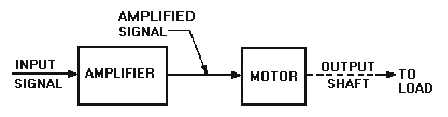
FIGURE 2: Open loop block diagram
1.6 Closed-loop system
- The opposite of an open-loop system is a closed-loop system. This is a system where the feedback of the process determines the next part of the process. For example, if there is a light that turns on in a room if motion is detected in the room, then that is a closed-loop system since the process of turning on the light entirely depends on feedback, in this case the introduction of motion.
A Closed-loop Control System, also known as a feedback control system is a control system which uses the concept of an open loop system as its forward path but has one or more feedback loops (hence its name) or paths between its output and its input. The reference to "feedback", simply means that some portion of the output is returned "back" to the input to form part of the systems excitation.
Closed-loop systems are designed to automatically achieve and maintain the desired output condition by comparing it with the actual condition. It does this by generating an error signal which is the difference between the output and the reference input. In other words, a "closed-loop system" is a fully automatic control system in which its control action being dependent on the output in some way.1.7 Closed Loop System:
Advantages:- Accuracy: They are more accurate than open loop system due to their complex construction. They are equally accurate and are not disturbed in the presence of non-linearities.
- Noise reduction ability: Since they are composed of a feedback mechanism, so they clear out the errors between input and output signals, and hence remain unaffected to the external noise sources.
Disadvantages:- Construction: They are relatively more complex in construction and hence it adds up to the cost making it costlier than open loop system.
- Since it consists of feedback loop, it may create oscillatory response of the system and it also reduces the overall gain of the system.
- Stability: It is less stable than open loop system but this disadvantage can be striked off since we can make the sensitivity of the system very small so as to make the system as stable as possible.
1.8 Closed-loop Control
 FIGURE 3: CLOSED LOOP BLOCK DIAGRAM1.9 Advantages and disadvantages of open loop and Closed-Loop control System.Open LoopClosed Loop1. Such systems are simple in construction.1. Accuracy of such system is always very high because controller modifies and manipulates the actuating signal such that error in the system will be zero2. Very much convenient when output is difficult to measure.2. Such systems senses environmental changes, as well as internal disturbances and accordingly modifies the error.3. Such systems are easy from maintenance point of view.3. In such system, there is reduced effect of nonlinearities and distortions.4. Generally these are not troubled with the problems of stability.4. Bandwidth of such system i.e. operating frequency zone for such system is very high5. Such systems are simple to design and hence economical.
1.9.1 Differentiate between open loop and closed loop control systemOpen LoopClosed Loop1. Any change in output has no effect on the input i.e. feedback does not exists.1. Changes in output, affects the input which is possible by use of feedback2. Output measurement is not required for operation of system2. Output measurement is necessary3. Feedback element is absent3.Feedback element is present4.Error detector is absent4. Error detector is necessary5. It is inaccurate and unreliable5. Highly accurate and reliable6. Highly sensitive to the disturbances6. Less sensitive to the disturbances7. Highly sensitive to the environmental changes7. Less sensitive to the environmental changes8. Bandwidth is small8. Bandwidth is large9. Simple to construct and cheap9. Complicated to design and hence costly10.Generally are stable in nature10. Stability is the major consideration while designing11. Highly effected by nonlinearities11. Reduced effect of nonlinearities1.9.2 The disadvantages of open loop and closed loop control systems are:Open LoopClosed Loop1. Such systems are inaccurate and unreliable because accuracy of such systems are totally dependent on the accurate pre calibration of the controller.1. Such systems are complicated and time consuming from design point of view and hence costlier.2. Such systems give inaccurate results if there are variations in the external environment i.e. such systems cannot sense environmental changes.2. Due to feedback, system tries to correct the error time to time. Tendency to over correct the error may cause oscillations without bound in the system. Hence system has to be designed taking into consideration problems of instability due to feedback. The stability problems are severe and must be taken care of while designing the system.3. Similarly they cannot sense internal disturbances in the system, after the controller stage.4. To maintain the quality and accuracy, recalibration of the controller is necessary, time to time.
1.9.4Automatic Control SystemAn automatic control system is a preset closed-loop control system that requires no operator action.This assumes the process remains in the normal range for the control system. An automatic control system has two process variables associated with it: a controlled variable and a manipulated variable.
A controlled variable is the process variable that is maintained at a specified value or within a specified range. In the previous example, the storage tank level is the controlled variable.
A manipulated variable is the process variable that is acted on by the control system to maintain
Functions of Automatic Control
In any automatic control system, the four basic functions that occur are:
i)Measurement
ii)Comparison
iii)Computation
iv)Correction
In the water tank level control system in the example above, the level transmitter measures the level within the tank. The level transmitter sends a signal representing the tank level to the level control device, where it is compared to a desired tank level.The level control device then computes how far to open the supply valve to correct any level control device correct any difference between actual and desired tank levels.
Elements of Automatic Control
The three functional elements needed to perform the functions of an automatic control system are a measurement element.An error detection element is a final control element.
Introduction to Control Process System
Introduction to Control Process System
Concept control system
-To sense deviation of the output from the desired value and correct it, till the desired output is achiev.
Controllers are the controlling element of a control loop
- element which accepts the error in some form and decided the proper corrective action.Their function is to maintain a process variable (pressure, temperature, level..) at some desired value
Plant
System- system or process through which a particular quantity or condition is controlled. This is also called the controlled system
Controller
- control elements are components needed to generate the appropriate control signal applied to the plant
Feedback elements
- components needed to identify the functional relationship between the feedback signal and the controlled output.
Reference point
- external signal applied to the summing point of the control system cause the plant to produce a specified action. This signal represents the desired value of a controlled variable and it also called “set point.”
Controlled output
- quantity or condition of the plant which is controlled. This signal represents the controlled variable.
- quantity or condition of the plant which is controlled. This signal represents the controlled variable.
- function of the output signal. It is send to the summing point and algebraically added to the reference input signal to obtain the actuating signal.
Actuating signal
- the control action of the control loop and is equal to the algebraic sum of the reference input signal and feedback signal. This is also called the “error signal.”
- the control action of the control loop and is equal to the algebraic sum of the reference input signal and feedback signal. This is also called the “error signal.”
Manipulated variable
- process acted upon to maintain the plant output(controlled variable) at the desired value.
- process acted upon to maintain the plant output(controlled variable) at the desired value.
Disturbance
- undesirable input signal that upset the value of the controlled output of the plant.
